Blogs

Keep the Brass out of your Blonde Hair with Black Shampoo
Platinum blonde and silver hair can be tricky to get right. The first step is making one (or in a lot of cases, more than one) appointment with a professional hair colorist, to get you that ultra-high-lift look. After that, at-home care is key to keeping your shade bright. Natural undertones and environmental factors can make it difficult to keep your blonde, grey, and silver hair brass-free. While our best-selling Silver Shine products are known for keeping the brass out of cool blonde tones. But popular ultra-icy platinum and silver shades require a little something extra. Our new Icy Blond shampoo deposits violet tones to counteract yellow tones in hair. Specialized black pigment gives cool ash tones to the hair. The powerful brass-fighting action of Icy Blond shampoo is supported by additional pigments in the softening conditioner.
Learn more
A Quick Guide to Plopping Curly and Wavy Hair
Attention all wavy and curly haired beauties, if you haven’t yet heard of plopping, take a seat. We are about to change your life. When it comes to living with textured hair, a gentle care routine is key. Hair with any amount of bend in it is generally drier and more fragile than straight hair. This makes how you handle your hair, really important. Plopping may just change the game when it comes to handling your hair at its most fragile state: when it’s wet. Read on to learn all about the curly hair care world’s best kept secret.
Learn more
7 tips for healthy and gorgeous summer hair
With the summer party and beach season just around the corner, now is the time to start prepping your hair so that it stays healthy, shiny and radiant. Just as the sun damages your skin, it can damage your hair, too. Saltwater and chlorine also take a toll on our tresses. But summer doesn't have to be the season of bad hair days. Learn how to protect your hair from the heat, sun, and humidity without turning it into an endless battle. We’re sharing some tips and tricks that will help keep your strands in top shape through beach, pool, and sun.
Learn more
Brassy Blonde Hair: Why it Happens & How to Fix it
If you’ve ever lightened your hair past a certain level, it’s likely you’ve encountered the “brass effect”. In fact, unwanted yellow, coppery or orange tones in lightened hair is one of the most common issues that sends clients crying to their colorists. While most of us have experienced brassy hair at one time or another, most of us don’t know what causes those pesky yellow, coppery tones to appear or how to get rid of them. While a booking an appointment at the salon is the best way to counteract the brass effect, there are some measures that you can take at home to keep it from happening.
Learn more
HELP! I overused my purple shampoo!
If you have cool-toned blonde hair, chances are your stylist sent you home with silver shine to help neutralize brass. While purple shampoo can do wonders for keeping cool tones in hair, it is possible to have too much of a good thing. So, what do you do when you’ve used too much purple shampoo? If you don’t have any underlying brassiness in your hair, there is nothing for the purple pigment to counteract—which will leave your hair looking purple. Tinted shampoo is not preventative, so feel free to use it when you see yellow tones start to appear in your hair (typically 1-2 weeks after your color service)
Learn more
Which Whipped Cream is Right for You?
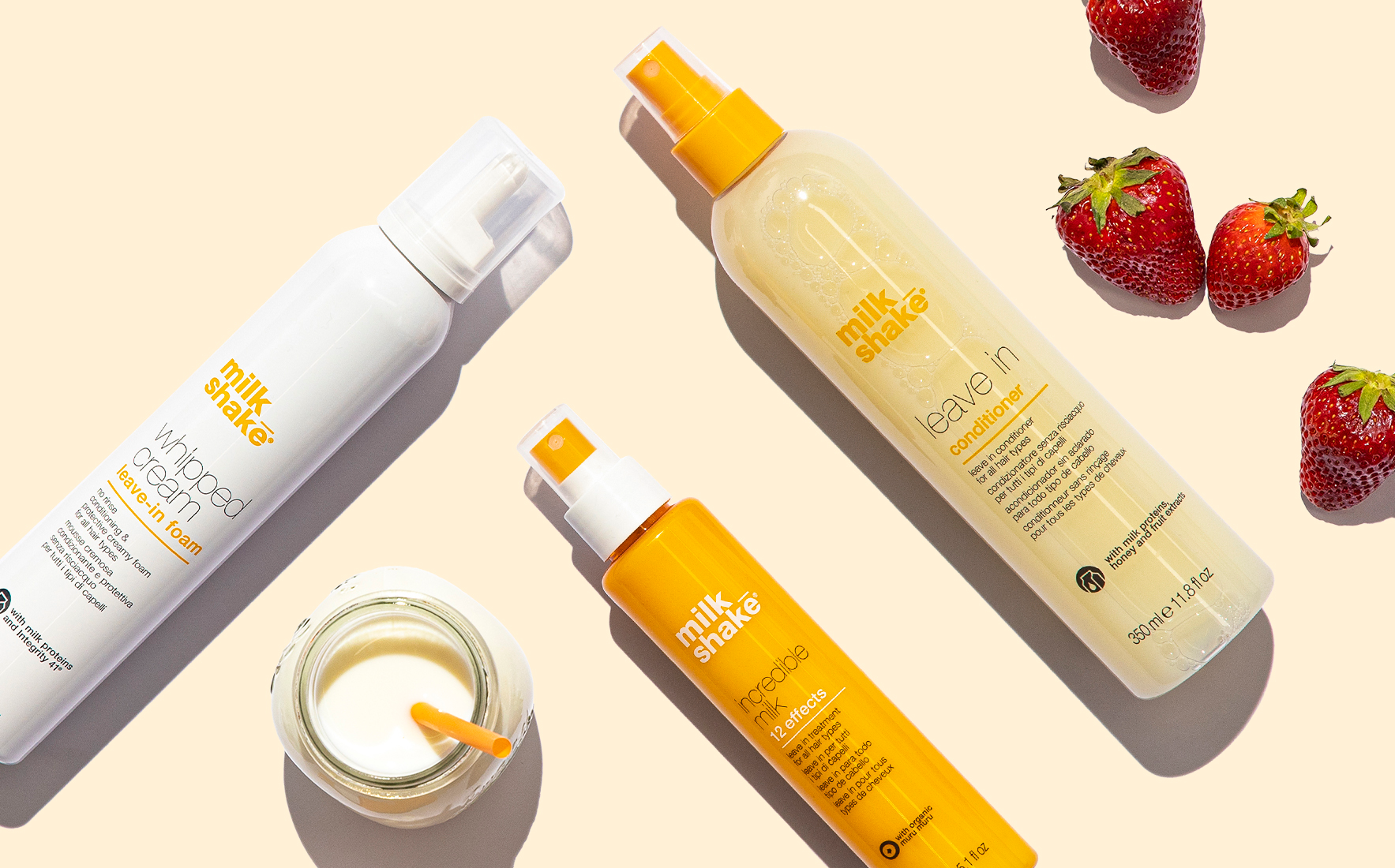
Everyone loves a little something sweet, which is probably why our most decadent leave-in conditioner is so popular! The main reason why milk_shake Whipped Cream leave-in conditioners are always in demand is because they are so versatile. Whatever your hair type or texture, whipped cream will leave it softer, shinier, more manageable, and thoroughly hydrated. But that’s not all there is to love. If you’ve already determined that whipped cream is the right leave-in conditioner for you, the next step is to pick a “flavor” Depending on your hair’s specific needs and the look you are going for, you may want to go with a specific formula. Consider this your guide to choosing the right whipped cream for you.
Learn more
How to protect your blonde hair from turning green in the pool
Does blonde hair turn green in the pool? Yes and no. Contrary to popular belief, chlorine is not the culprit when it comes to blonde hair turning greenish after a swim. The single best thing that you can do for your hair after swimming is to use a deep cleansing shampoo. The combination of sun and salt is like a one-two punch to your hair’s hydration. Cleanse with Deep Cleansing Shampoo Moisturize with Sun & More Beauty Mask Protect with Sun & More Incredible milk
Learn more
Are sulfates and silicones really bad for your hair?
The world of beauty product ingredients is a lot like Hollywood—not all press is good press. Sulfates, silicones and sodium have all gotten a bad rap—but is it really that simple? Let’s take a closer look at t shampoo and how these ingredients work. What is shampoo? Simply put, shampoo is a cleanser that is specially formulated to be used on hair. Just like how your body wash is different from your face cleanser (hopefully), shampoo has a formula all its own. Shampoo was developed to remove dirt, environmental contaminants and sebum from the hair shaft and scalp. There are thousands if not millions of different ingredient combinations for shampoo, with some getting their fair share of bad press. Controversial Shampoo Ingredients Unless you’re using a shampoo bar, the number one ingredient listed on most shampoos is water. One important thing to note about shampoo ingredients is that they are typically listed in order of concentration. If water is listed first, it’s likely that it is the highest percentage ingredient in your shampoo. Sulfates are another common ingredient in shampoos and arguably the biggest current baddie. However, if you enjoy a nice, foamy lather in your shampoo then you have sulfates to thank for that. There are many different types of sulfates, but some of the most commonly used in shampoo are ammonium lauryl sulfate, sodium laureth sulfate, and cocamidopropyl betaine. Sulfates get a bad rap, but the truth is that they work better for some hair types than others. Those with very dry /damaged hair and scalp may want to limit their use of products containing sulfates. milk_shake sulfate –free shampoos: Integrity nourishing shampoo Color maintainer shampoo Silicones are another controversial shampoo ingredient—mostly because they are not easily rinsed away. As a result, rumors started circulating that silicones cause build up on hair. The truth is that silicones can be removed with most shampoos and unless you have very fine hair, you likely won’t experience any adverse effects from silicones. In fact, silicones coat the hair strand which helps eliminate frizz and improve shine. You may have also noticed sodium chloride—or salt—listed in many shampoos as well. Sodium chloride can help fine hair look more voluminous, since it roughens up the cuticle. This also serves a purpose for delivering hydrating ingredients into the hair shaft. Finally, let’s talk about citric acid. While it may sound scary to put any kind of acid into your hair, citric acid is actually really useful. It works to bring down the pH level of the shampoo, which helps to improve manageability. Citric acid also helps to protect your scalp from free-radical damage and is found in most citrus fruits. At milk_shake we pride ourselves on our use of high-quality ingredients that are dedicated to improving hair healthy and are typically sourced from nature. One key ingredient that you will find in nearly all of our product are milk proteins.
Learn more
Here's what you need to know about your curly hair
If you’re looking for the perfect way to wear and care for your curls, then look no further than your local salon. If your stylist has experience working with textured hair (and it’s likely that they do!) They are going to be your best resource for learning everything you need to know about taking good care of your hair. Here are a few things you will want to ask during your next consultation. What’s my curl type & texture? There are two main things to take into consideration when learning how to best care for your curls: Curl type Hair texture Knowing the shape of the curl can help to determine how much additional moisture it needs and knowing the overall hair texture can help to know how much additional moisture it can handle. Let’s get into it. Different Curl shapes Believe it or not, more than half the world’s population has some form of curly hair. The main difference between each type of curl is its shape. Of the three main categories of curl, the shapes can vary. Curl types by shape Wavy: primarily “S” shaped curl pattern Curly: primarily “C” shaped curl pattern Coily: Primarily a tight “Z” shaped curl pattern Why does curl shape matter? When it comes to care, the tighter the curl, the more hydration it needs. This is because the bend in the strand makes it difficult for naturally occurring oils to travel from the scalp down to the ends of the hair. This makes it harder for strands to get moisture and leaves them feeling dry. Basically, the higher up on the strand the curl starts, the drier it is. What’s my curl texture? While identifying what your base-line moisture needs are by curl type is a great first step, knowing how much moisture your hair can handle is just as important. That’s were getting to know your hair texture comes in. Hair texture needs Fine: needs lightweight moisture Medium: need moderate moisture Thick/coarse: needs a LOT of moisture Looking for the perfect care routine for YOUR curly hair? Check out milk_shake Curl Passion! Learn more HERE>>>
Learn more